
Happy Black History Month: An Inheritance Interrupted
My black history was erased somehow.
Misplaced.
Displaced.
It died on boats.
In fields.
I mean, WAIT.
I can’t talk about slavery, or they’ll say:
“Get over it.”
“That was over 400 years ago.”
“Look at them Black people, always looking for excuses for their lack.”
Lack, you say?
Like the lack of representation in high places,
where we are still celebrating “the first Black…” in 2026.
Or the lack in our education system, carefully designed to perpetuate your stigma.
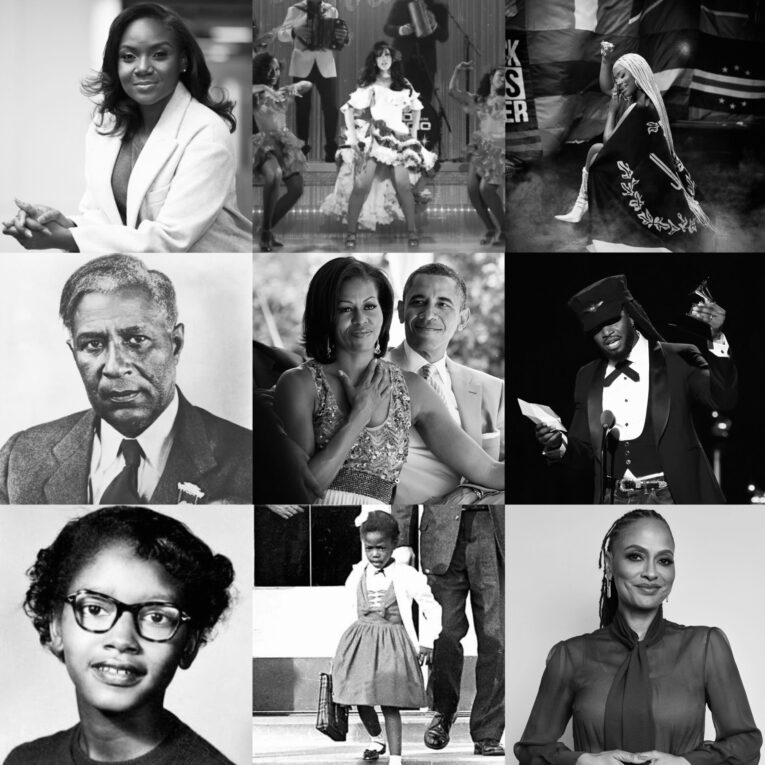
As if it wasn’t just 1960, when Ruby Bridges was the first Black child to integrate at formerly whites-only William Frantz Elementary School during the New Orleans school desegregation crisis. She had to be accompanied by U.S Marshalls and received death threats.
Or in 2020, when the U.S. Department of Justice sued Yale University alleging racial discrimination in undergraduate admissions.
Or in 2023, when the Supreme Court ended affirmative action altogether. Removed the one of few tools meant to counter generations of exclusion. Immediately, Black enrollment at selective universities declined.
And now we see the continuation:
public schools that punish Black children more harshly,
grade systems that predict incarceration,
discipline policies that funnel students from classrooms into courtrooms.
That’s the school-to-prison pipeline.
Must I continue?
Healthcare Betrayal And Human Devaluation
The lack of trust Black/African Americans have in the healthcare system
because you used our bodies as laboratories.
Because you sat there and experimented on Black men during the Tuskegee syphilis study,
withheld treatment,
and still had the audacity to call it “research.”
So when you say “Here they go again, justifying the erosion of their communities,”
Do you mean the same communities you declared war on in 1971?
The same ones you flooded with drugs,
introduced crack cocaine into,
and then sentenced at alarmingly harsher rates than white counterparts
for the very addiction you engineered?
Oh, but let me pause,
before I’m mistaken for an angry Black woman.
You scripted the narrative for Black/African Americans so well
that even Black immigrants have learned to repeat it.
Creating a divide so deep
it would take a dissertation to unpack.
But here’s the thing.
God exists.
So now let’s Look What God Has Done
despite the deliberate attempts to reduce me
to nothing more than a stereotype,
a statistic, or a caricature you were comfortable dismissing.
Black History and Black Excellence
Did you know Claudette Colvin, a 15-year-old Black girl, refused to give up her seat on a Montgomery bus nine months before Rosa Parks, but was deemed “too loud,” “too dark,” and “too young” to be the face of the movement?
Did you know Henrietta Lacks’ cells were taken without her consent in 1951, and those cells, HeLa cells, became the foundation of modern medicine, used to develop vaccines, cancer treatments, and medical breakthroughs, while her family remained in poverty for decades?
Or that Dr. Charles Drew, the father of modern blood banking, was forced to resign from the American Red Cross when they insisted on segregating blood by race, despite his scientific proof that blood has no racial difference.
And Garrett Morgan, the inventor of the traffic signal and gas mask, had to hire a white actor to pose as the inventor of his own work just so his invention would be taken seriously.
These names weren’t forgotten because they lacked greatness.
They were buried because their greatness disrupted the narrative.
And Black excellence continues today.
Barack and Michelle Obama didn’t just occupy the White House, but redefined leadership, partnership, intellect, and global Black representation for generations to come.
Dr. Kizzmekia Corbett, a Black immunologist, played a central role in developing the COVID-19 vaccine.
Ava DuVernay created her own distribution pathways because Hollywood refused to make room, and now her work reshapes culture, history, and storytelling globally.
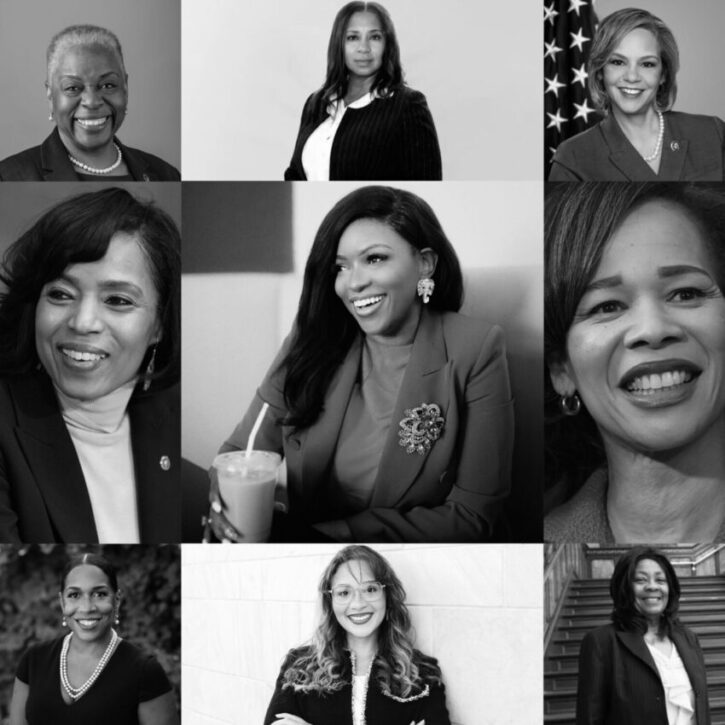
While Black entrepreneurs, creatives, politicians, educators, and organizers continue to build institutions, movements, and wealth often without the luxury of failure, safety nets, or public grace.
Black History Is Layered: And That’s The Point
Black history is not singular.
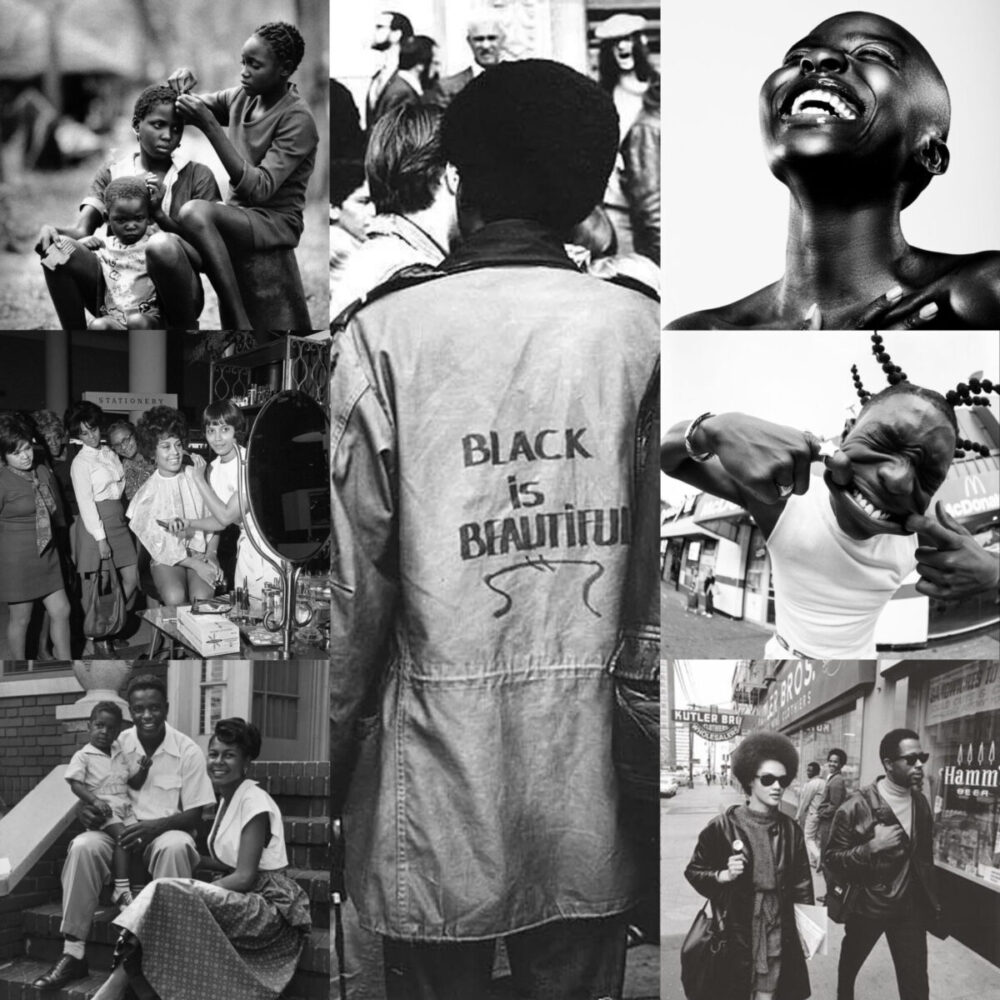
It is continental, diasporic and layered across oceans, languages, foods, rhythms, and traditions.
Africans.
Black/African Americans.
Caribbeans.
Afro-Latinas.
Each carries a different relationship to colonization, displacement, survival, and identity, and none of those experiences cancel the other. Unity does not require sameness. It requires respect. And when we refuse to acknowledge the fullness of Black identity, we end up fighting one another for proximity to whiteness instead of dismantling the systems that benefit from our division.
That’s why the diaspora wars feel so loud, because they’re useful. They allow systems of power to point and say, “See? Even they don’t agree.” They keep us arguing over who belongs instead of questioning why belonging was denied in the first place.
Being Black is not one-dimensional. And pretending that it is does a disservice to all of us.
Blackness is race.
Ethnicity is culture.
Nationality is geography.
You can be Black and Afro-Latina.
Black and Caribbean.
As well as,
Black and African.
Black and American.
One does not cancel the other. And no one should have to amputate parts of themselves to make others comfortable.
We saw this play out when Cardi B performed on SNL and people rushed to say, “I thought she was Black.” Cardi B is Black and has never said she wasn’t, but she’s also Afro-Latina, and more specifically Afro-Caribbean Latina. Her culture and identity is layered. She embraced her culture while standing alongside other Black dancers, each with their own identities beyond a single label. Someone embracing their ethnicity does not negate their Blackness.
Diaspora Wars, Naming Lineage, And The Monaleo Conversation
Tension surfaced again when Monaleo released a song calling herself a “Sexy Soulaan Black American princess” and was immediately ridiculed for naming her specific Black lineage. And that reaction didn’t come from nowhere.
There is a deep divide among Black people globally, what people now casually call the diaspora wars, but there is also a very specific divide happening within Black/African Americans themselves. For example, The foundational Black American movement is rooted in a desire to name a distinct historical experience: Black people born in America whose parents, grandparents, great-grandparents, and beyond were also born on this land. I understand that context. I understand the impulse to protect history that has been erased and diluted.
While not everyone within the foundational Black American movement engages in this rhetoric, it would be dishonest not to acknowledge the division it has created, particularly toward other Black/African Americans and Africans.
Respecting how people choose to identify should not come with conditions. And if you have to elicit hate, disrespect, and division against others to support your identity, you might want to reevaluate if your mission is to have identity or rather feel superior in a world that is designed to make you inferior.
For me personally, I would never call myself a foundational Black American or claim indigeneity to America. That would be inaccurate. I am a descendant of Africans. My ancestry confirms it. And even with my family being in America for over 400 years, even with the fact I have had dinner on the same plantation my family once picked cotton on, I still choose to identify as African American. That identity holds both truths: my African lineage and my American reality.
Context Matters: The Shaboozey Moment and Misplaced Rage
The same lack of nuance showed up in the reaction to Shaboozey, who found himself in hot water after stating that this country was built by immigrants. And while I completely understand why many people were upset, especially given how often Black/African American history is erased, context matters more than outrage alone.
I am not Shaboozey. I don’t know his full intent. But at minimum, what I do understand is that he was speaking as the child of Nigerian immigrants in a political climate that is actively hostile to immigrants, a climate where racism, deportation threats, and state violence are not abstract, but daily realities. ICE agents are waging a war on immigrant communities, and that fear shapes how people speak, frame history, and assert belonging.
I do not believe his statement was meant to erase Black/African American history. He stated his intent was to not erase Black/African American history. This is why conversations across Black cultures matter so deeply.
There are Africans who hold deeply prejudiced, and sometimes outright racist beliefs about Black/African Americans. There are Black/African Americans who carry those same prejudices and racism toward Africans. When Africans say Black Americans are lazy because “if I could come here and succeed, what’s your excuse?” ignoring centuries of systemic sabotage, that’s harmful. When Black Americans mock African accents, foods, and traditional clothing, intentionally distancing themselves from anything African, that’s harmful too.
And when the only image either group has of the other comes from mass media, which overwhelmingly profits from showing Blackness at its worst, misunderstanding becomes inevitable.
Look What God Has Done For Black History
The problem is not difference.
The problem is approaching difference with superiority instead of curiosity.
The media loves negativity. So the most divisive voices are always the loudest. But quietly, every single day, there are Africans, Black/African Americans, Caribbeans, Afro-Latinas building community together, loving one another, learning one another, and honoring the complexity and beauty of all our cultures.
That truth just doesn’t trend as well.
So here’s my ask.
Be open-minded and willing to learn.
Be slower to defend and quicker to understand.
Because Black history is layered.
Heavy.
Sacred.
And expansive.
So yes, this blog is longer than I usually write. But Blackness is too vast to be brief. And if you made it to the end, thank you. Don’t be surprised if there’s a Part 3.
Because again
My black history was erased somehow.
Misplaced.
Displaced.
It died on boats.
In fields.
I mean, WAIT.
Look What God Has Done.
And let’s continue to make black history.
Happy Black History Month Mi Amors.



Your point of view caught my eye and was very interesting. Thanks. I have a question for you. https://accounts.binance.com/uk-UA/register-person?ref=XZNNWTW7